
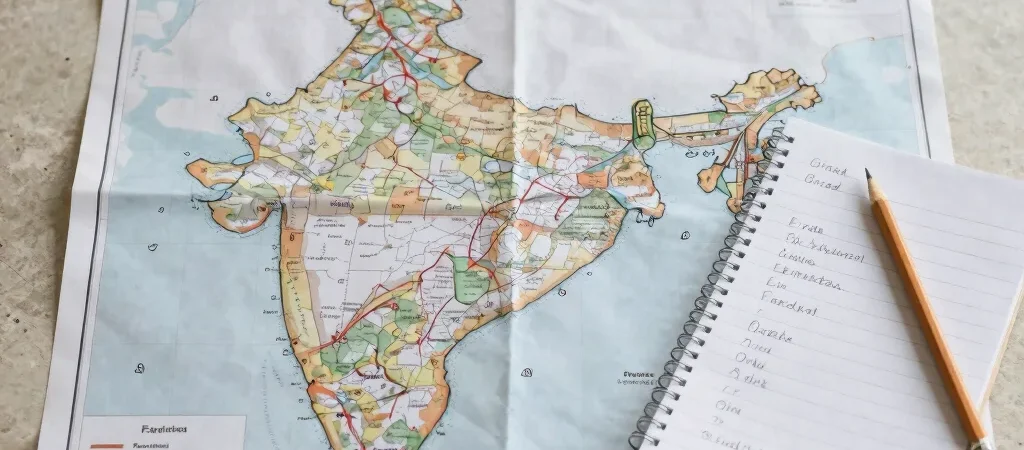
A map of places associated with Baba Farid can look simple: a name, a marker and a short note. The history behind each marker is not so simple. Girad near Nagpur, Pakpattan in Pakistan and Faridkot need individual entries that explain the nature of their association rather than implying that every place is documented in the same way.
Separate biography from place
A biography should first introduce Baba Farid as Fariduddin Masud, a medieval Chishti Sufi figure, using sources that support the details it includes. It should not use a site’s local tradition as automatic proof that Baba Farid lived there or that a particular building dates to his lifetime. Those are separate claims and need separate evidence.
Each location page can then explain its own connection. Pakpattan is closely associated with Baba Farid’s shrine tradition and appears under the historical name Ajodhan in older accounts. Girad has focused coverage as a site associated with him near Nagpur, while Faridkot should have its own entry that identifies the specific local association and the sources supporting it.
Make uncertainty readable
A consistent page format helps visitors compare places without confusing kinds of evidence. For each site, record the present-day location, the name used in local accounts, the nature of the association, the sources consulted and any open questions. Mark oral accounts as local tradition, and attach dates to named sources rather than presenting an unsourced date as fact.
The result is more than a list of shrines: it is a guide to how Baba Farid’s memory is connected to different places. Keep Girad easy to find, give Pakpattan its distinct historical context and treat Faridkot on the evidence available for that site. A map becomes trustworthy when its labels show not only where a place is, but what is—and is not—known about its connection.